
Many parents assume that once children know mathematical basics, they understand the ideas behind them. Yet a child may count to 100 but struggle to tell how many cups are on a table, or recognise the numeral 5 but be unable to draw five squares.
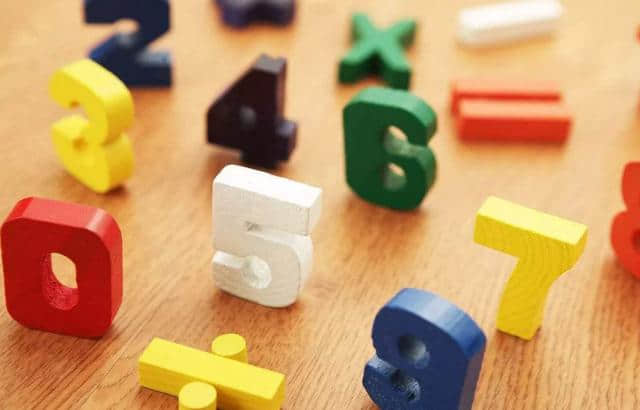
This makes us ask whether our approach to early mathematics has become too simplistic and forceful.
In his work on children’s natural mathematical thinking, Greg Nelson has suggested that:
Children have a natural capacity for mathematics, while inappropriate early learning approaches can undermine that potential.

What pitfalls might families encounter as children begin learning mathematics?
Failing to see learning from the child’s perspective
Missing an appropriate stage for learning may leave children without helpful ways of thinking and learning. Begin with an understanding of number rather than immediately asking a child to explain the abstract equation 1 + 1 = 2.
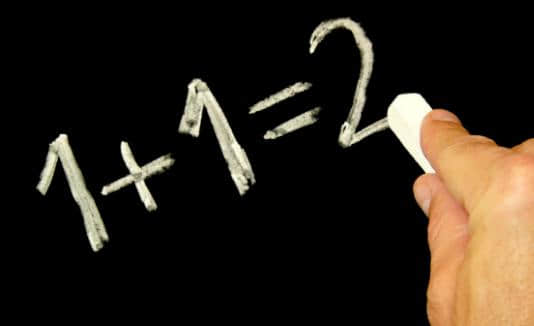
Between ages three and six, thinking is often grounded in concrete images and experiences. A child may understand that one cup together with another makes two cups, while finding an abstract equation harder to grasp.
Introducing too many abstract mathematical ideas before children can work with them may make number difficult to understand, and can reduce their interest as they move towards school.
Teaching without considering the child
Wanting children to succeed, some parents push them into books and exercises. Pressure can instead create reluctance to learn. Strong calculation performance may sometimes reflect repeated practice rather than understanding.

Passing on the idea that mathematics is boring
When children first encounter mathematics, they have not necessarily formed a view of it. Adults who remember it as dull or difficult can pass those feelings on, leading children to expect mathematics to be hard.