Classroom observation and discussion are central to kindergarten-based professional learning. They are more than taking notes or finding faults: observation records evidence, discussion explores it, and the aim is to improve teaching and support children’s development. Common pitfalls include watching only the teacher while missing children’s responses, or praising the atmosphere without suggesting useful changes. This guide follows preparation, observation and discussion, with approaches for everyday kindergarten practice.
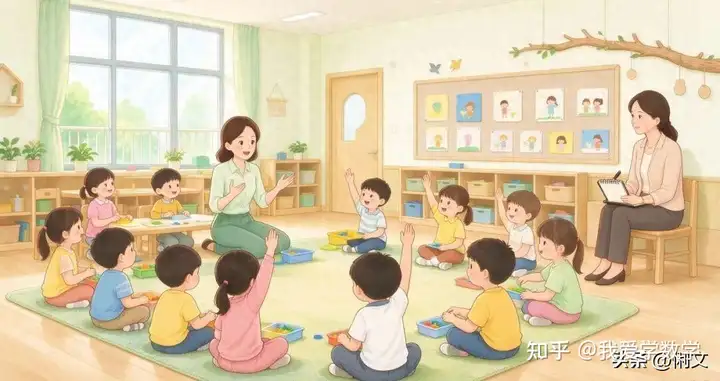
Before the observation: prepare rather than arriving without a focus. Observation is not an unplanned visit; preparation gives it direction.
✓ Communicate in advance. Confirm the learning area (health, language, society, science or the arts), age group, intentions, key points and challenges with the teacher. Ask which professional question the activity is intended to explore. For example, in a middle-group science activity, focus on children’s enquiry.
✓ Choose an observation focus. One session cannot cover everything. Select one of these two perspectives:
Focus on the teacher: question design, adult–child interaction, resources, transitions and responses to unexpected situations.
Focus on the children: participation, language, enquiry, peer interaction and responses to difficulties.
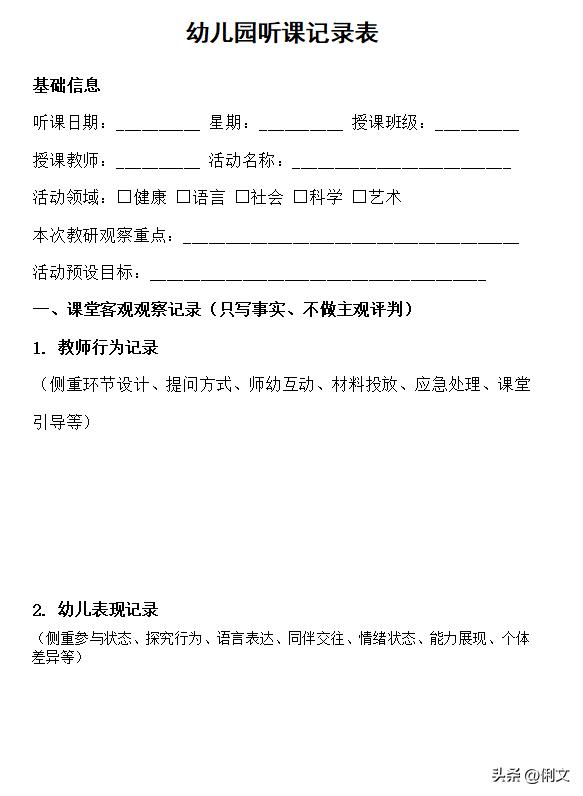
✓ Prepare a notebook and pen. Instead of copying the lesson plan, leave separate spaces for teacher actions and children’s actual responses.
A reminder: minimise disruption. Sit near a corner, silence your phone, and avoid taking photographs or interrupting the activity.
During the observation: record real situations effectively. Kindergarten activities are grounded in play and everyday life. Do not turn your notes into a word-for-word transcript. Use a ‘facts plus annotations’ approach.
Keep two kinds of notes. Objective evidence records only what was seen or heard, without adding judgement. For example:
✗ Unhelpful: ‘The teacher asked excellent questions and the children were very enthusiastic.’ This is a subjective judgement.
✓ Evidence: ‘The teacher asked, “What differences do you notice between the leaves?” Eight children raised their hands, three volunteered their ideas, and two handled materials without speaking.’ These are observable facts.
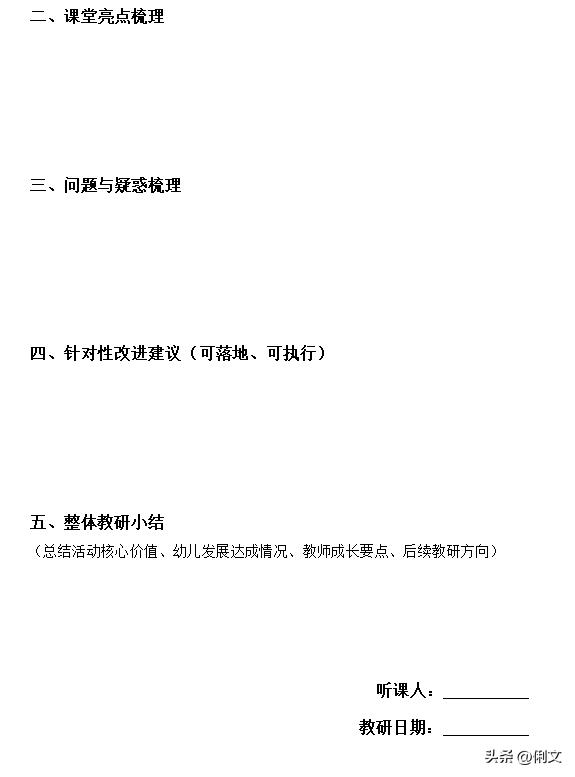
Immediate annotations: briefly flag questions, strengths and discussion points. Use symbols such as ★ for a strength and ? for a question.
★ The teacher offered materials at different levels, allowing children needing more support to choose a simpler template.
? The teacher waited less than two seconds after a question, then invited another child before the first had time to think.
An observation checklist for everyday practice. Learning intentions: do they fit the age and characteristics of this group? Can they be put into practice rather than remaining broad slogans?
Resources: are the materials safe and usable? Do they support children’s independent exploration?
Questions: distinguish closed questions (‘Is it?’, ‘Is that right?’) from open questions (‘Why?’, ‘What could you try?’). Notice follow-up questions and whether the teacher listens to children’s answers.
Children’s responses: are they simply following the teacher, or participating actively? Do they have opportunities to try, make mistakes and try again?
Adult–child interaction: how does the teacher respond to unexpected answers or situations? Are children’s ideas respected?
Activity design: are transitions natural and the timing suitable? Is there a rushed ending after an overly slow start?
✓ The key measure is the children’s experience. A successful activity is not just one that runs smoothly for the teacher; children should be involved and developing their understanding.
After the observation: discuss constructively and focus on what matters. This is a particularly common source of difficulties. Discussion is peer-supported professional learning, not a judgement or score. Follow this order: self-reflection → dialogue with colleagues → shared learning.
Teacher self-reflection comes first. Invite the teacher to explain: ① intended and achieved learning; ② aspects they felt worked well; ③ difficulties or unexpected events; and ④ questions they still have, such as unsuitable materials or uneven participation.
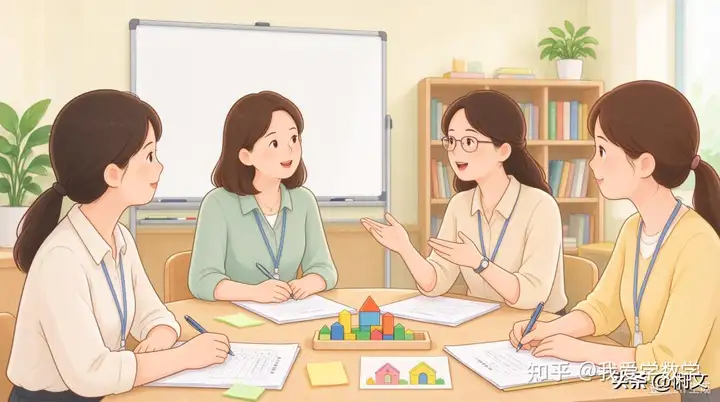
Peer discussion should address the practice rather than the person. Use strengths + questions + suggestions. Avoid comments such as ‘This activity failed; no one was interested’ or ‘That part was designed terribly.’
✓ A useful structure is: ‘I observed…’ (evidence) → ‘A strength of this approach was…’ → ‘One point we could explore is…’ → ‘A practical adjustment might be…’
Example:
‘I noticed a wide range of teaching materials’ (evidence). ‘The visual materials quickly attracted children’s attention’ (strength). ‘In the second half, most hands-on time was concentrated among a few children, leaving others with fewer opportunities’ (discussion point). ‘We could work in groups and provide more sets of materials so that every child can try.’
① Intentions and development: do the intentions match children’s current experiences and abilities, or are they too demanding or too simple?
② Quality of interaction: does the teacher listen and respond meaningfully to children’s answers?
③ Materials and play: do resources invite enquiry, with room for children to make choices?
Shared learning: the professional learning lead brings the discussion together, identifies transferable practices and possible improvements, and writes a short record to support implementation.
Common pitfalls in observation and discussion. 1. Watching only the teacher’s ‘performance’ and overlooking children’s real responses.
Misconception: a smooth sequence and quiet classroom always mean a good activity.
Correction: quietness does not establish effectiveness. Children’s willingness to express ideas and explore gives an activity its value.
2. Offering praise without questions, or finding faults and rejecting everything.
Misconception: professional discussion becomes a celebration or a criticism session.
Correction: take an objective view. Identify strengths worth learning from, and discuss problems alongside possible solutions.
3. Copying primary or secondary observation models, prioritising information delivery and overlooking play.
Misconception: finishing knowledge points matters more than children’s experiences, emotions or social development.
Correction: kindergarten activities are about experience and perception; allow children to have different ideas.
4. Recording subjective impressions without concrete examples.
Misconception: notes say ‘It felt good’ or ‘The atmosphere was excellent’ without examples of children’s behaviour.
Correction: ground every view in details actually observed during the activity.
At its heart, kindergarten observation is a professional conversation from the child’s perspective. Observing means noticing carefully; discussing means reflecting thoughtfully. The purpose is to study together which environments, questions and resources truly support independent learning, rather than judging an individual teacher. Sustained, careful observation supports professional growth and helps collective activities serve children.
Appendix: a short observation record template, suitable for printing.